The framework, since February 2016
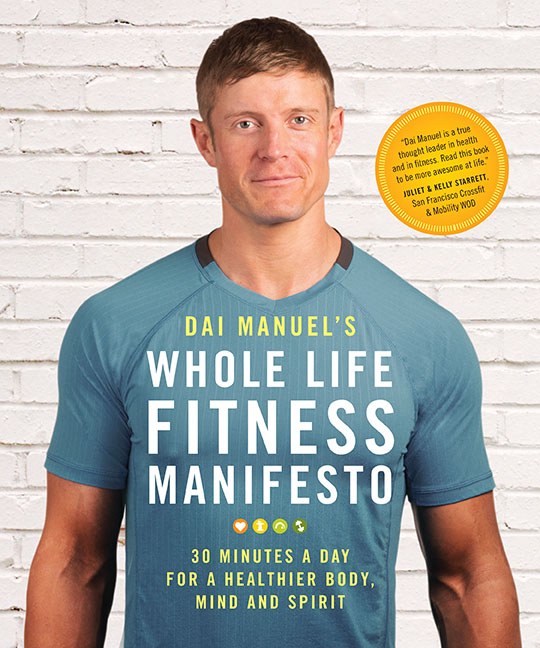
The Whole Life Fitness Manifesto
15
Move
Bodyweight, anywhere, as many rounds as the clock allows.
5
Be still
No phone, no input. Breathe and let the noise settle.
10
Feed your head
Read, write or listen to something that makes you better.
The method in brief
Whole Life Fitness is thirty minutes a day, defended.
The short version, before the chapters. Thirty minutes a day, split 15/5/10: fifteen minutes of movement, five of stillness, ten of reading. Four anchors you write down and keep: train, steps, protein, sleep. Five Fs that the whole thing is meant to hold up: Fitness, Family, Faith, Finances and Fun.
Not another six-week shred. Not a diet with a countdown. Whole Life Fitness is the small daily agreement that keeps the rest of your life from falling off the edge: Fitness, Family, Faith, Finances and Fun, held up by movement, stillness, and one honest step after another.
The agreement
Two percent.
Thirty minutes is roughly two percent of a day. That is the whole ask. Not an hour. Not a gym membership. Not a complete wardrobe of supplements. Two percent, most days, is enough to change the trajectory.
The point is not the session. The point is not stopping. A walk and three pages counts. A slow stretch and five minutes of breath counts. The habit matters more than the intensity.
The daily ritual
- Two glasses of water on waking.
- Warm up (optional, recommended).
- 15-minute workout, as many rounds or reps as possible.
- Cool down (optional, recommended).
- 5 minutes meditation: stillness, reflection, thankfulness.
- 10 minutes personal development. Read, write, listen.
The four anchors
Vague plans fail. Specific anchors survive.
You do not need twelve habits. You need four you can name, measure, and defend when the day goes sideways. Write one sentence for each. Put them where you will see them.
Train
A short, deliberate movement practice, most days.
Steps
Walk more than you sit. Simple, not glamorous.
Protein
Build most meals around whole food and enough protein.
Sleep
Protect the hours that let everything else work.
The worksheets
Put it on paper.
The method works better when you write it down. Five free downloads: the cheat sheet, the Manifesto guide, the Week 0 protocol, the four anchors worksheet, and the baseline tracker. Three are fillable on your phone. All of them print clean.
1 page · print
The one page cheat sheet
Everything that matters on a single page. The daily thirty, the four anchors, the five Fs, and what to do on the day you miss. Print it and put it on the fridge.
10 pages · read
The Whole Life Fitness Manifesto guide
The short version of the method. The two percent agreement, the four behaviors, the 28 day arc, and the honest version of what Day 28 looks like.
4 pages · fillable
The Week 0 setup protocol
The week before Day 1. Readiness questions, your nine baseline measurements, your four anchor sentences, and the dates you are committing to.
2 pages · fillable
The four anchors worksheet
Train, steps, protein, sleep. Write one specific sentence for each. Vague plans fail. Specific anchors survive.
2 pages · fillable
The baseline tracker
Day 0 against Day 28, side by side, with the reflection questions that make the numbers mean something.

Chapter 1
Whole Life Fitness
Thirty minutes a day. Two percent. That is the whole ask.
Most plans fail at the negotiation stage. An hour a day is a real argument against a career, a marriage and kids, and it is an argument you lose the first week everything goes wrong. So the plan has to be small enough that you cannot argue with it.
Thirty minutes is that size. Fifteen minutes of movement, five of stillness, ten of feeding your mind. You do not rebuild your life around it. You plug it into the life you already have, and you defend it.
The point is not the session. The point is not stopping. Thirty minutes is what not stopping looks like.
- 15 minutes moving, 5 minutes still, 10 minutes reading or listening to something that makes you better.
- A bad thirty minutes still counts. A walk and three pages counts.
- No gym and no equipment required, which removes the last excuse.
Chapter 2
Discover Your Personal Why
The five Fs, and the reason you will still be doing this in March.
Nobody sticks with something for a number on a scale. They stick with it for a reason that sits underneath the number. So before the workouts, you name the reason.
The five Fs are the cornerstones: Fitness, Family, Faith, Finances and Fun. When one of them is starving, the others feel it. Health is the one that holds the rest up, which is why it goes first, not last.
Write your why down somewhere you will see it on a bad day. Then make the goal specific, measurable, actionable, realistic and time-bound, so it is a plan and not a wish.
F
Fitness
The one that holds the other four up.
F
Family
The people who feel it when you are running empty.
F
Faith
Whatever you believe in bigger than yourself.
F
Finances
Stress here leaks into everything else.
F
Fun
Skip it and the whole thing turns into a chore.

- Fitness, Family, Faith, Finances, Fun. Score yourself honestly on each.
- Widen the focus from this week's goal to your whole life.
- Make the goal SMART and put a date on it.
Chapter 3
Eliminate Your Why Nots
Every excuse is one of four things: time, fear, energy or motivation.
Almost everyone has started a fitness plan and quit it. Usually we go too hard, too fast, out of enthusiasm, and then crumble the moment life gets heavy. Sometimes we are overwhelmed before the first rep.
Name your why nots out loud instead of carrying them around. Once they are on paper they turn out to be smaller and more solvable than they felt.
Then shrink the first step until it is embarrassing. Start with fifteen minutes. Start with the part you enjoy. The habit matters more than the intensity.
- Write down your top three reasons for not starting, then answer each one.
- If thirty feels like too much, start at fifteen and build.
- Begin with the exercises you actually like doing.
Chapter 4
It's About Time
You are not short of time. You are short of a plan for it.
Every excuse, travel, kids, a brutal job, is a version of the same one: a time crunch. Meanwhile most of us spend the majority of our waking hours sitting, and the research on what that does is not kind.
Thirty minutes is two percent of a day. You can find that in a lunch break, before the house wakes up, or in the gap you currently spend scrolling. Look at tomorrow's calendar tonight and put it in.
Own the choice. Every small action cascades. A little every day beats a lot occasionally, every single time.

- Book the thirty minutes in your calendar the night before.
- Earlier is safer. The day steals time from later.
- This is a lifestyle, not a six-week push.
Chapter 5
Mental Fitness
Five minutes of stillness and ten of feeding your mind.
Meditation is not robes and incense. It is sitting down and doing nothing on purpose, breathing, letting the noise settle. Five minutes. No phone, no input, no optimising.
This is the part men skip and the part they feel first: less reactivity, better sleep, a shorter fuse on the fuse.
The other ten minutes are personal development. Read, write, or listen to something that makes you better. A book, not a feed. The mind trains the same way the body does, in small regular doses.
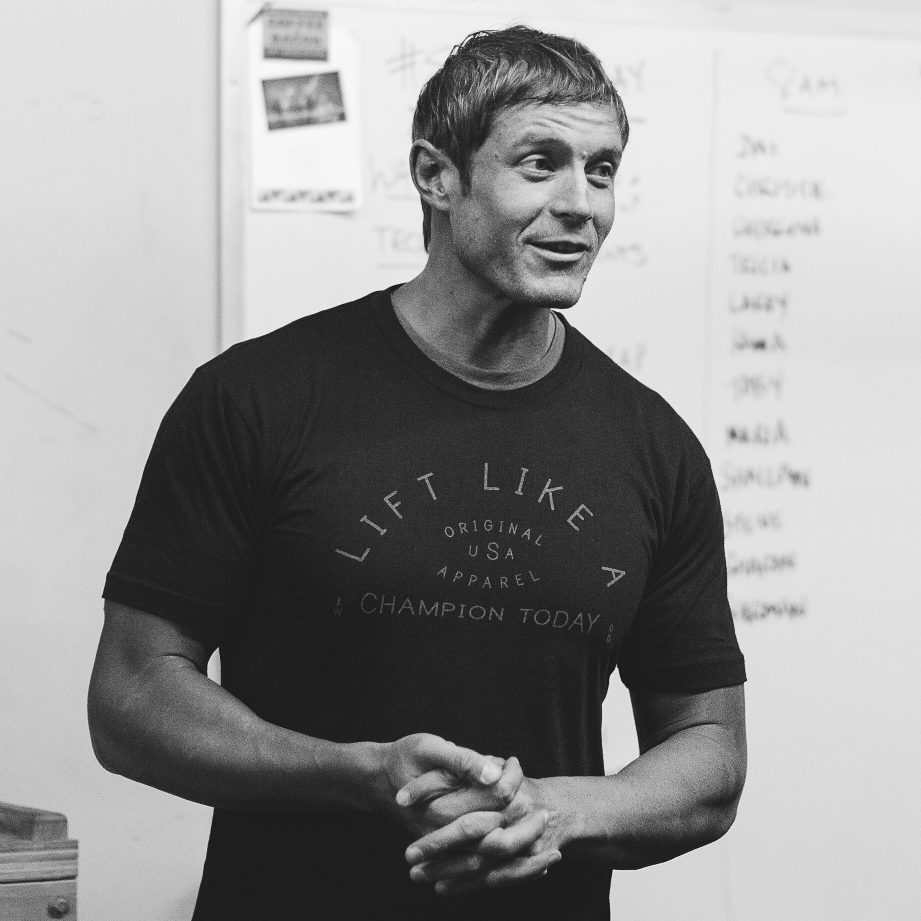
- Five minutes of stillness, reflection and thankfulness, daily.
- Ten minutes of reading, writing or listening with intent.
- Journal the week: what was easy, what was hard, what you are proud of.
Chapter 6
Eat Smart
Not a diet. A short list of habits you can keep for twenty years.
As a teenager I ate from a list of ten safe foods and never deviated. It got me out of obesity and it wore me down. That is not a method, it is something I recovered from. Diet just means the food you eat, not a punishment.
So the rules here are boring on purpose. Protein first thing in the morning. Greens with every meal. Water, 68 to 101 fl oz (two to three litres) a day. Go meatless one meal a day or one day a week. Eat whole food more often than packaged food.
And the ten percent rule: ninety percent of the time eat for your health, ten percent of the time enjoy yourself without guilt. Moderation is what makes it survivable.
- Protein in the morning, greens at every meal, 68 to 101 fl oz (2 to 3 litres) of water.
- 90 percent nourishing, 10 percent enjoyment, no guilt.
- Photograph what you eat for a week. Awareness does most of the work.
Chapter 7
The Basic Moves
Bodyweight movements that work anywhere, with a modification for every one.
You need no equipment and no gym. The whole programme runs on squats, push-ups, sit-ups, lunges, step-ups, planks, glute bridges, burpees, jumping jacks, mountain climbers, air skips and a handful of variations on those.
Learn the shape of each one before you chase reps. Every move has an easier version: wall push-ups instead of floor, chair squats instead of full depth, a march instead of a sprint. Modified is not lesser, it is correct for today.
Warm up, move, cool down. Five to ten minutes of rolling out knots with a foam roller or a lacrosse ball on the days your body asks for it.
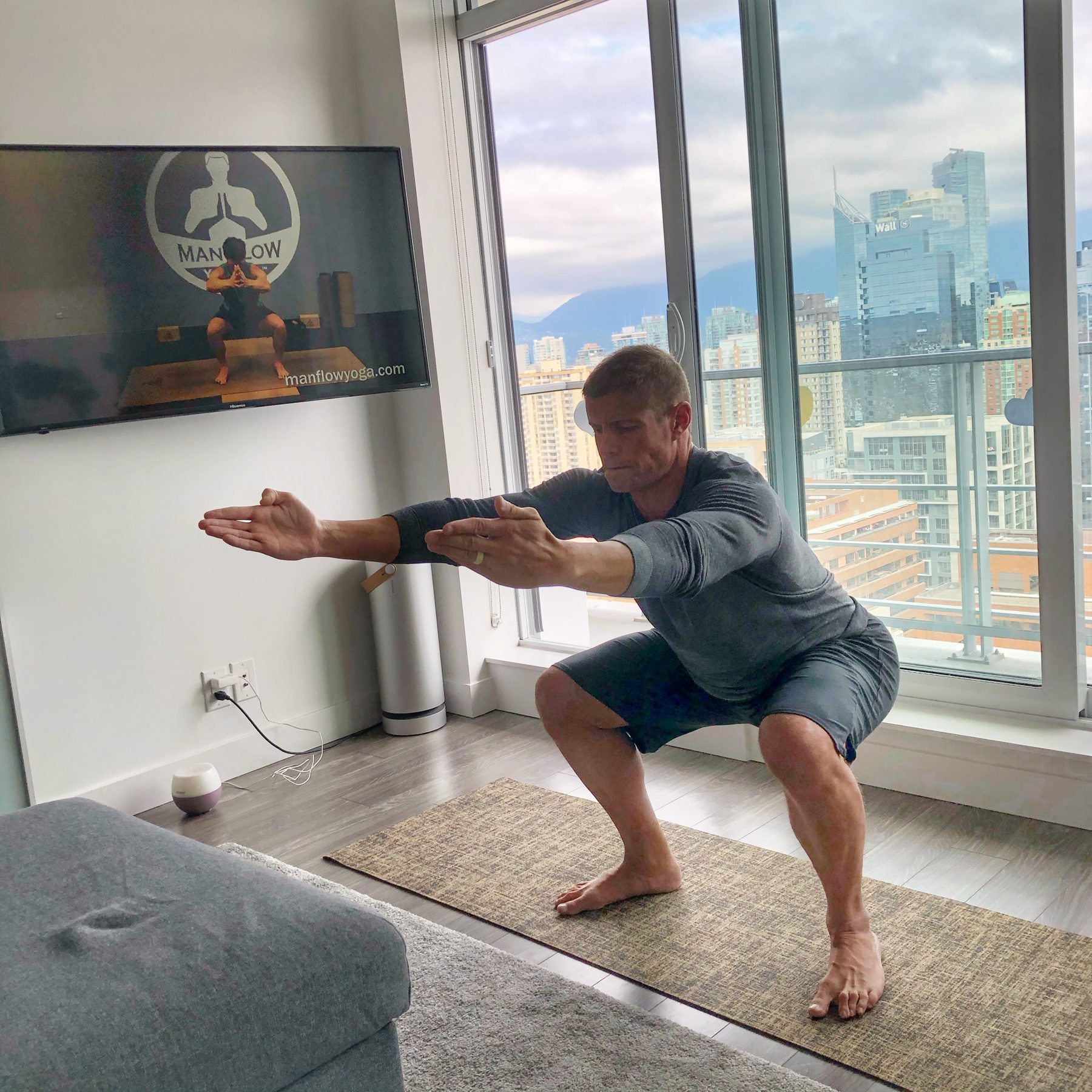
- Upper body, lower body, core. Pick one of each and you have a workout.
- Use the modified variation until the basic one is clean.
- Record what you did. Rounds completed is your score.
Chapter 8
The Whole Life Fitness Power 30
The four-week programme. The full thing is laid out further down this page.
Four weeks, twenty-eight days, thirty minutes a day. Each day has a fifteen-minute workout you repeat for rounds, five minutes of stillness and ten minutes of personal development, plus a short list of habits for the week.
Before day one you take your measurements, run the baseline fitness test and take your photos. At the end of week four you do all three again, and the comparison is the point.
It is not an instant fix. It is a sustainable, doable routine that you can run again, harder, or build your own version of once the habit is real.
- Same ritual every day, different fifteen-minute workout.
- Measure at the start so week four means something.
- Retest every eight weeks after that.
Chapter 9
Healthy for the Long Haul
Life will interrupt this. The plan already accounts for that.
You will get sick, get injured, travel, have a week where everything goes wrong. Slowing down to heal is not failure, it is what you are supposed to do.
Keep the habit alive even when the workout shrinks. Something with purpose and intent for fifteen minutes, plus the stillness and the reading, and I am happy. Just do not give up.
Change things up when inspiration strikes. Variety keeps it alive. Our futures are mostly decided by what we choose today, and it is never too late to choose differently.

- Missing a day is not quitting. Missing a week on purpose is.
- Scale the movement, keep the ritual.
- Pay it forward. Bring somebody with you.
The programme, in full
The Whole Life Fitness Power 30
Four weeks. Twenty-eight days. Thirty minutes each day, split the same way every time. The workouts change, the ritual does not. No gym, no equipment, a chair if you have one.
Every fifteen-minute workout is AMRAP: finish one set of each exercise, start again, keep going until the clock runs out, and write down how many rounds you got. That number is your score and the only competition is the version of you from last week.
Starting today? The standalone Power 30 page is the same programme on its own, easier to bookmark and come back to each morning.
Every single day
- Two glasses of water on waking.
- Warm up (optional, recommended).
- 15-minute workout, as many rounds or reps as possible.
- Cool down (optional, recommended).
- 5 minutes meditation: stillness, reflection, thankfulness.
- 10 minutes personal development. Read, write, listen.
Before day one
Write down a SMART goal and why it matters. Take your measurements: neck, upper arm, chest, waist, hips, thigh, calf and weight. Take photos from the front, back and both sides in good light. Then run the baseline test below and keep the score.
You repeat all of it at the end of week four. Most people do not believe the change until they see the two sets of numbers next to each other.
Squats
How many in one minute, basic or modified?
Push-ups
How many in one minute, basic or modified?
Sit-ups
How many in one minute, basic or modified?
1 mile (1.6 km) jog or run
How many minutes to finish? Same route when you retest.
Stork balance
How many seconds can you stand on one leg?
Sit and reach
Legs out, bend at the waist. How far past your toes?
Week 1
Week one is about building the habit and taking honest stock of what gets in the way.
Habits this week
- Drink 68 to 101 fl oz (two to three litres) of water each day.
- Skip soft drinks, fruit juice and alcohol on weekdays.
- More greens, fruit and whole food. Less processed and pre-packaged.
- Name one thing you accomplished at the end of every day and write it down.
- Walk with your head up, make eye contact, offer a smile.
Day 1
- 5 push-ups
- 10 sit-ups
- 15 squats
Day 2
- 10 alternating reverse lunges (5 per leg)
- 40 air skips
Day 3
- 15 chair squats
- 15 chair step-ups
- 15 chair dips
- 15 wall push-ups
Day 4
- 20-second sprint on the spot
- 20-second rest
- 20 seconds jumping jacks
- 20-second rest
Day 5
- 30 seconds step-ups
- 30 seconds push-ups
- 30-second plank
- 30-second rest
Day 6
- 15 glute bridges
- 45-second plank
- 15 to 30 seconds rest
Day 7
- 7 burpees
- 30-second rest
And so completes Week 1. Boo-yah.
Week 2
Momentum week. You are starting to feel the mood, energy and sleep change before you see anything in the mirror.
Habits this week
- 68 to 101 fl oz (two to three litres) of water a day.
- Cap yourself at five treat drinks for the whole week.
- Get something green into every meal.
- Compliment a different person each day.
Day 8
- 50 air skips
- 25 sit-ups or crunches
Day 9
- 10 caterpillar stretches
- 30-second squat hold (a wall sit works)
Day 10
- 50 jumping jacks
- 40 squats
- 30 sit-ups
- 20 push-ups
- 10 burpees
Day 11
- Walk 60 to 90 seconds
- Jog 15 to 30 seconds
- Run 5 to 15 seconds (indoors: fast feet on the spot)
Day 12
- 30 seconds lateral hops
- 30 seconds feet shuffle
- 30 seconds jumping jacks
- 30-second rest
Day 13
- 30-second front plank
- 30-second right side plank
- 30-second left side plank
- 60-second rest
Day 14
- 10 burpees
- 30-second plank
And so completes Week 2. Bam.
Week 3
Ramp-up week, and the week most people doubt themselves. Go back to your why and keep going.
Habits this week
- Drink water every hour or so, deliberately.
- Cut to three non-nutritious treats for the week.
- Reconnect with a friend you have not spoken to.
- Write down two moments from last week where you surprised yourself.
Day 15
- 20 seconds left-leg hopping
- 20 seconds right-leg hopping
- 20 seconds high-knee jogging
- 20-second rest
Day 16
- 30 jumping jacks
- 20 forward and back shuffles
- 10 skater lunges
Day 17
- 15 squats
- 10 push-ups
- 20 sit-ups
Day 18
- 20 mountain climbers (10 each leg)
- 20 glute bridges
- 30-second rest
Day 19
- 20 reverse swimmers with a pause
- 30 seconds stationary sprints
Day 20
- 10 push-ups, timed
- Rest for as long as the set took, then repeat for 15 minutes
Day 21
- 45 to 60-second plank
- 45 to 60-second squat hold
- 5 burpees
- 30-second rest
And so completes Week 3. Kaboom.
Week 4
Push the intensity and notice that the ritual has stopped feeling like a decision.
Habits this week
- At least 101 fl oz (three litres) of water a day.
- Keep avoiding sugary drinks.
- Three whole-food meals a day, loaded with greens.
- Clear out the cupboards and take a donation to the food bank.
- Call someone who will back your lifestyle change.
Day 22
- 20 alternating lunges (10 per leg)
- 10 step-ups
Day 23
- 5 push-ups
- 10 sit-ups
- 15 squats
Day 24
- Part one, 7-minute AMRAP: 10 step-ups, 15 glute bridges
- One minute rest
- Part two, 7-minute AMRAP: 30-second plank, 30 seconds air skips
Day 25
- 5 caterpillar stretches
- 10 jumping jacks
- 15 lateral hops
Day 26
- 5 push-ups
- 10 sit-ups
- 15 alternating reverse swimmers
Day 27
- 15 minutes of walking, talking and smiling. Indoors, dance instead. Be silly, have fun.
Day 28
- 100 burpees for time, or 15 minutes, whichever comes first. Any pace. Keep moving.
And so completes Week 4. You made it.
After week four
Retake the baseline test, the measurements and the photos. Compare. Then decide what is next: run the four weeks again and feel how different it is, or build your own.
Building your own is simple. Pick one lower body move, one upper body move and one core move. Set the reps or the seconds. Fifteen minutes, as many rounds as you can. Squats, push-ups, thirty seconds of sit-ups is a complete workout and always will be.
Go harder by scaling the same three: five reps each is hot, ten is bold, fifteen with a forty-five second plank is spicy. Retest your baseline every eight weeks.
The weekly letter
The 2%
One short letter every Sunday. What I am seeing in the men I coach, one thing worth trying, and no hype.
First written in February 2016 and published as The Whole Life Fitness Manifesto. This page is the version I still hand to men on a first call, because it fits in their life today. Talk to your doctor before you start anything new, especially if you have an injury or a condition.